Black Streaks on Your Florida Roof: What They Are and How to Safely Remove Them
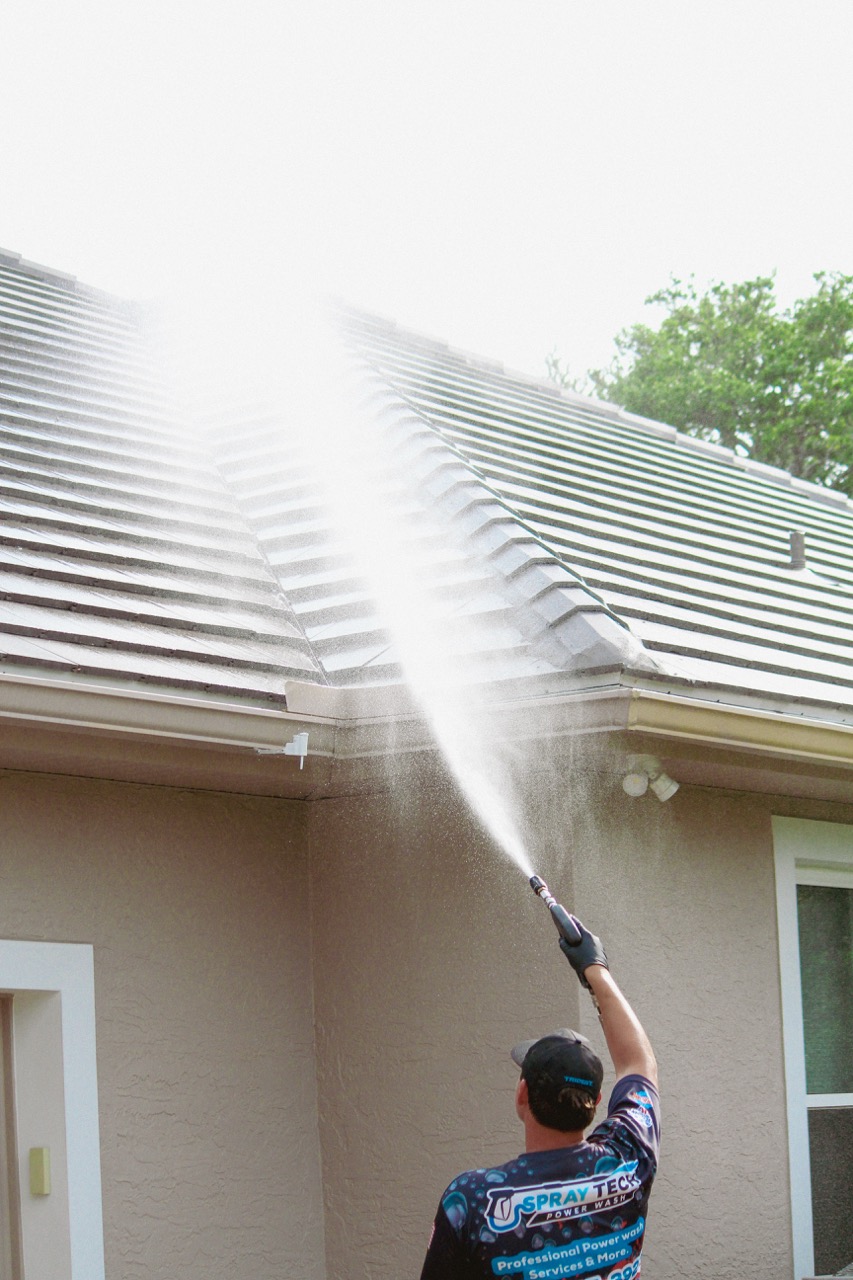
If you've looked up at your Palm Coast roof and noticed dark streaks running down from the ridge toward the gutters, you're seeing one of the most common problems on Florida homes. Those streaks aren't dirt, and they aren't a sign your shingles are failing. They're a living organism, and once they take hold, they don't go away on their own.
Here's what they actually are, why Florida roofs get them worse than almost anywhere in the country, and what cleaning can and can't do about them.
What the black streaks actually are
The dark streaks on your roof are a cyanobacteria called Gloeocapsa magma. Despite the look, it isn't mold or mildew. It's a hardy organism that feeds on the limestone filler in modern asphalt shingles, and it spreads through the air as spores. Once it lands on a damp shingle, it anchors in and starts colonizing.
The streaking pattern comes from gravity. As the colony grows and gets heavier, it slowly pulls downward across the shingles, leaving the dark trails you see from the street. The north and west-facing slopes of your roof usually show it first because those areas hold moisture longer.
Why it's worse on Florida roofs
Gloeocapsa magma needs three things to thrive, and Florida supplies all three in abundance:
- Year-round warmth. Temperatures rarely drop low enough or long enough to slow algae growth, even in the winter months.
- High humidity. Average humidity here regularly sits above 70%, keeping shingles damp longer than they would be in drier climates.
- Frequent summer rain. Daily afternoon storms during the rainy season keep roof surfaces wet for hours at a time, which is exactly the moisture window the bacteria needs to spread.
In drier or colder regions, algae growth is seasonal. In Flagler County, it's year-round. That's why a roof that looked clean two years ago can suddenly show streaks across an entire slope, and why neighboring homes often develop the same problem within a year or two of each other. The spores travel on wind, and once one roof in a neighborhood is colonized, surrounding homes are at risk.
Why pressure washing is the wrong answer
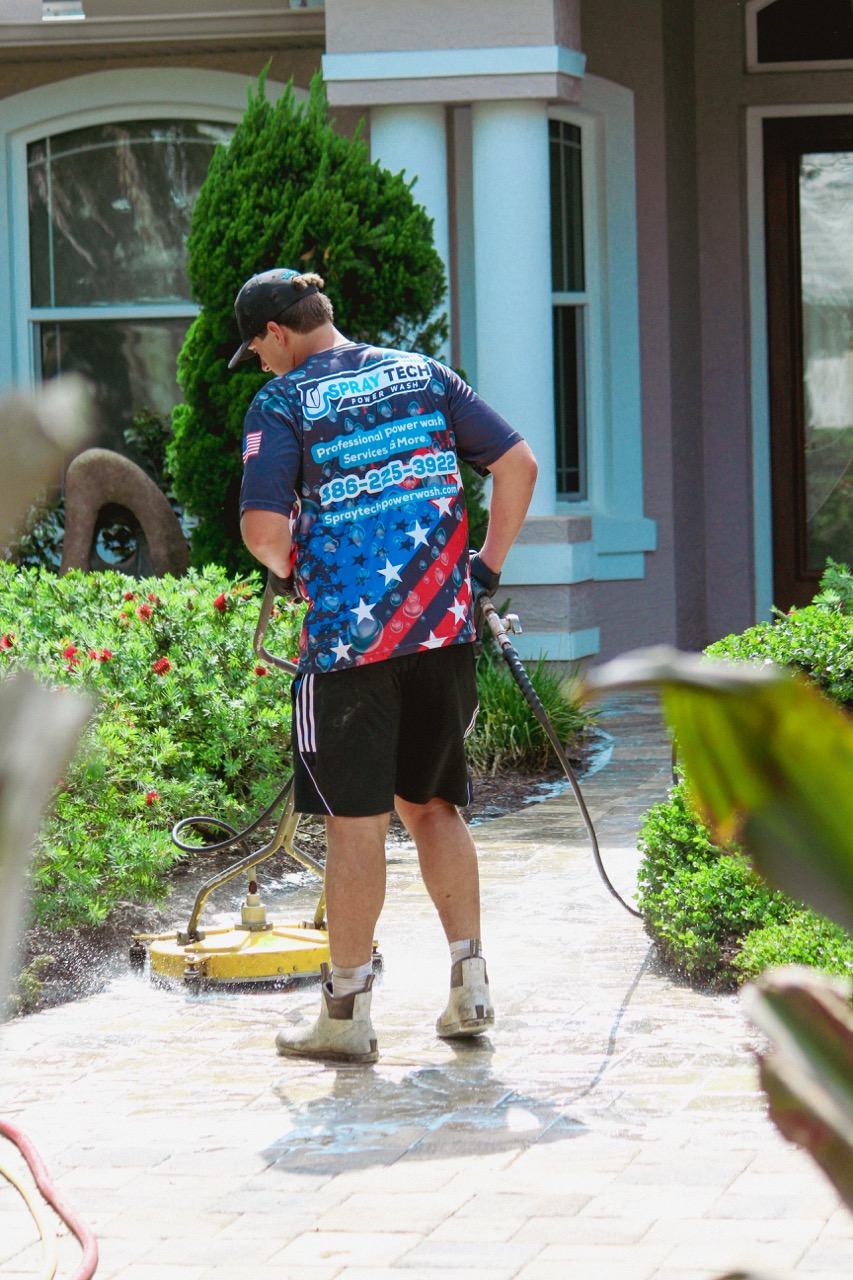
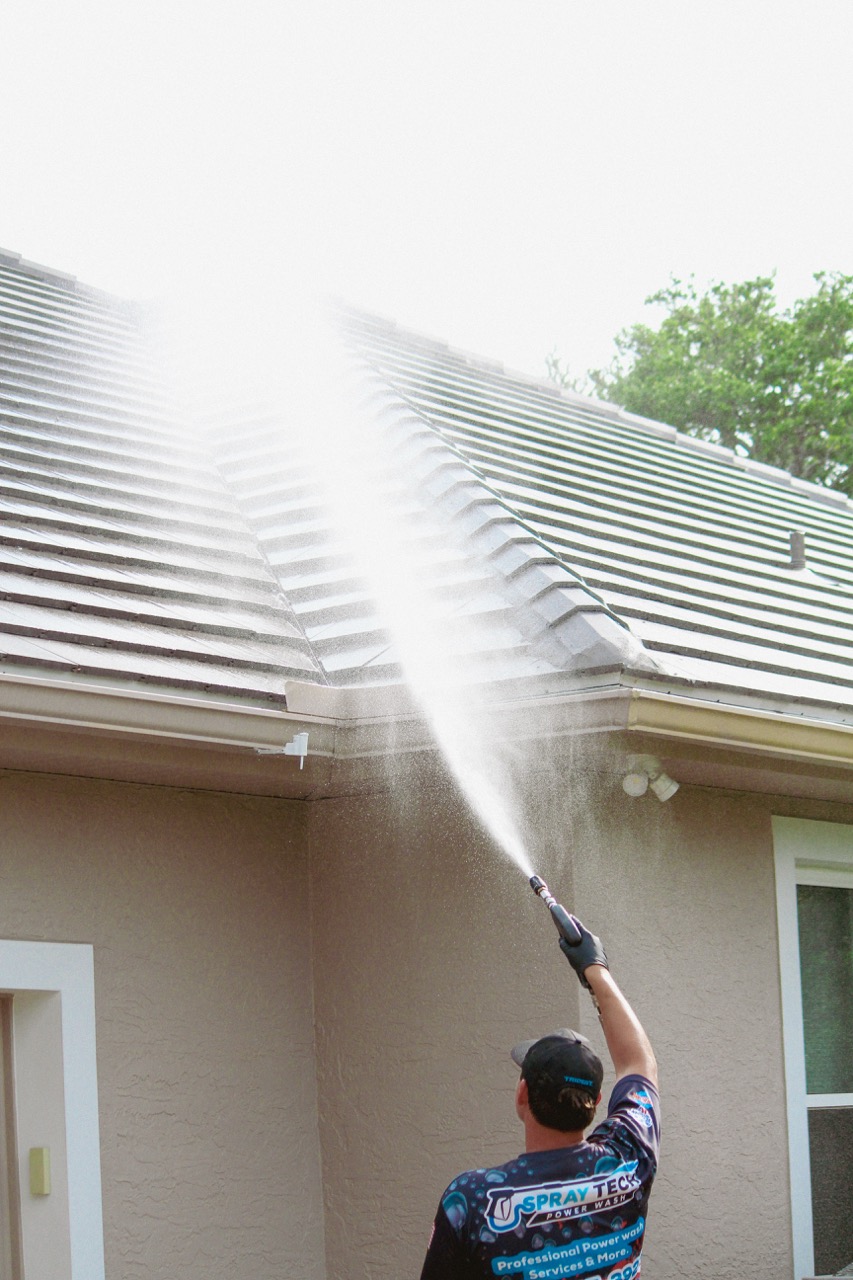
This is where homeowners often run into trouble. The instinct is to grab a pressure washer or hire someone who will. The problem: high-pressure water on asphalt shingles strips off the protective mineral granules that shield your roof from UV damage. Once those granules are gone, they're gone. The roof looks clean for a season, but its lifespan is shortened, and the streaks come back.
The Asphalt Roofing Manufacturers Association, the trade body for the major shingle manufacturers, explicitly warns against using power washers or stiff brushes on asphalt shingles for any purpose, including algae removal. Pressure washing a shingle roof can also force water under the shingles, which leads to leaks, and most major shingle manufacturers will void the warranty on a roof that's been pressure washed. We turn down jobs where homeowners ask us to pressure wash their shingles for exactly these reasons.
What soft washing does instead
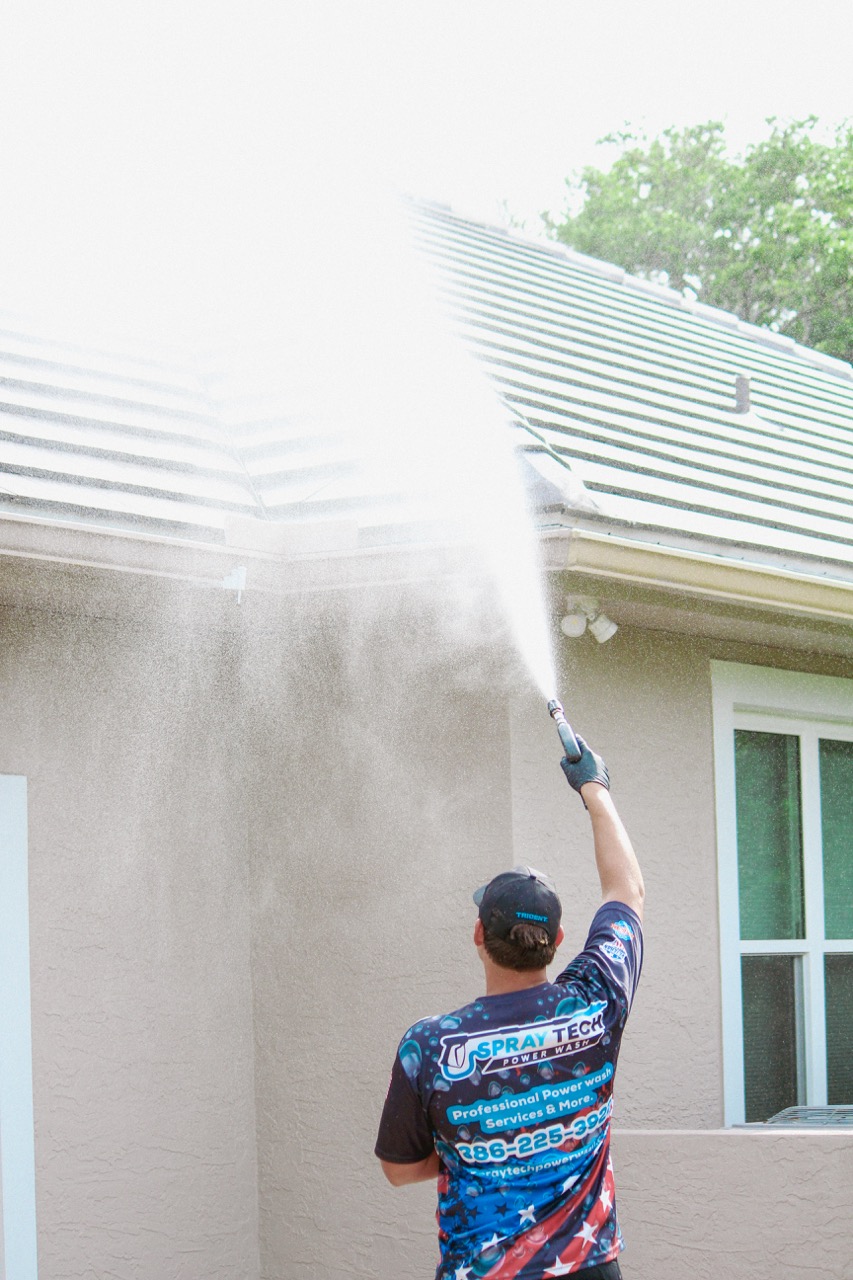
Soft washing uses low pressure (about the same as a garden hose) combined with a cleaning solution that kills the algae at the root. The solution is what does the work, not the water pressure. Once the bacteria is killed, rain rinses the dead material away over the next few weeks, and the roof returns to its original color.
Done correctly, a soft wash removes the streaks without disturbing the granules and follows the low-pressure cleaning approach manufacturers actually recommend. Treatments typically last several years before the roof needs attention again.
What cleaning can and can't fix
Worth being honest about both sides of this.
What it does fix:
- Removes the visible streaks and restores the roof's original appearance
- Stops the active spread of the colony before it reaches more of the roof
- Extends shingle lifespan by removing the bacteria that's slowly degrading the limestone filler
What it can't fix:
- Granule loss that's already happened. If your shingles have been pressure washed in the past or are simply at the end of their life, cleaning won't restore lost granules.
- A roof that's already failing structurally. Cleaning is for cosmetic and preventative maintenance. If your roof is leaking or has missing shingles, you need a roofer first.
- Permanent prevention. Gloeocapsa magma spores are airborne and will eventually return. A properly done soft wash typically keeps a roof clear for several years before maintenance is needed again.
When to schedule it
If the streaks are visible from the street, they've likely been growing for a year or longer. There's no urgency in the way a roof leak is urgent, but the longer the colony grows, the more limestone it consumes and the more your shingles' protective layer thins out. Most homeowners we work with schedule a roof cleaning every three to five years, which is enough to keep the bacteria from doing real damage.
Spring and early summer are good times to schedule, before the heaviest growth months and before hurricane season debris starts collecting on the roof.
Ready to take a look?
SprayTech Power Wash provides professional roof cleaning and soft washing for homeowners across Palm Coast, Flagler Beach, St. Augustine, Ormond Beach, and the surrounding area. We use the right pressure for every surface, and we'll tell you honestly what cleaning will and won't do for your specific roof. If you also want to get other exterior surfaces handled before storm season, our hurricane season prep guide covers what to prioritize.
When you book with SprayTech, a portion of every job goes toward supporting Blind Soccer Nation and the U.S. Paralympic Blind Soccer Team. Good work for your home, and a little good in the world while we're at it.